

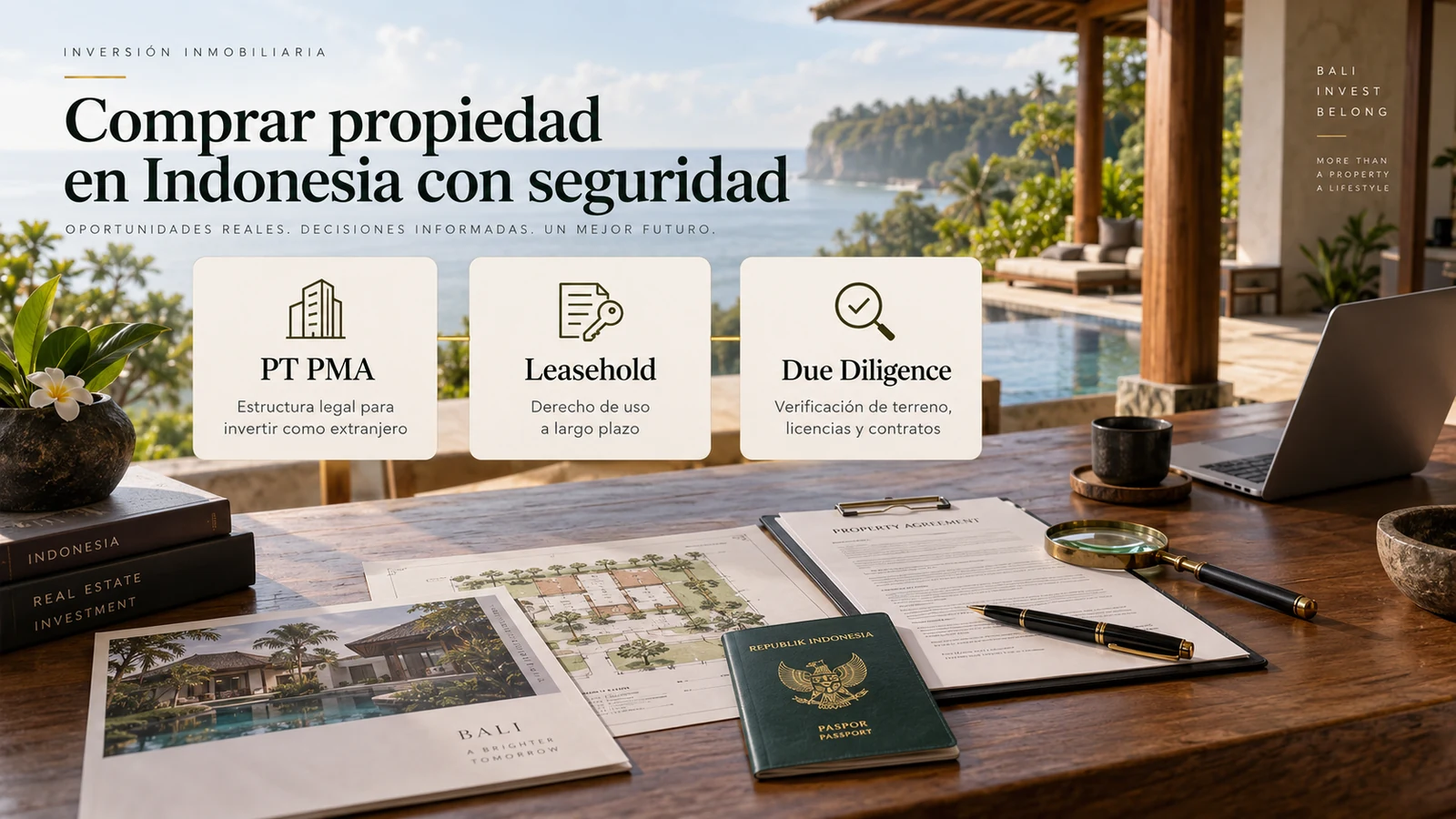
Investing in Indonesia can be highly attractive, but it should not be approached like a traditional property purchase in Europe. The opportunity exists, especially in tourism destinations such as Lombok and Bali, but investor confidence depends on three layers: legal structure, land and licensing review, and the real ability to operate the villa after purchase.
The first rule: understand what is being acquired
Before discussing yield, views or design, a foreign investor should understand the legal structure of the transaction. Indonesia has restrictions around direct land ownership by foreigners, so different structures may be used depending on the case: corporate structures, long-term leases, rights of use or construction rights.
The key point is simple: informal arrangements should be avoided, and every transaction should be reviewed by qualified local professionals. A villa can look commercially attractive, but if the title structure, licence or tourism use is not properly resolved, the risk is transferred to the buyer.
PT PMA, leasehold, Hak Pakai and HGB: concepts buyers should know
The investor does not need to become an Indonesian lawyer, but they do need to know which questions to ask before signing.
PT PMA
An Indonesian foreign investment company. It may be useful for structuring certain investments and business activities, always with specific legal and tax advice.
Leasehold / Hak Sewa
A long-term lease structure. It is common in some areas and should be reviewed carefully for duration, extensions, operating rights and transferability.
Hak Pakai
A right of use. It can appear in structures involving foreigners, with conditions and limitations that should be validated by a notary and local lawyer.
HGB
A right to build. In certain contexts it may be held through an appropriate entity, but it requires legal and land-use review.
The decision should not be based on intuition. It should answer a practical question: does this structure allow the investor to buy, build, operate, sell or transfer the investment with reasonable security?
Due diligence: what should be reviewed before buying or selling
Due diligence is not a formality. It is the difference between a defensible investment and a transaction based on verbal trust. For a serious developer, having this layer organised is also a commercial advantage: it reduces objections and helps buyers make decisions faster.
- Land title or contractual right, and exact match with boundaries and plans.
- Permitted land use and compatibility with tourism villa or accommodation activity.
- Construction licences, technical permits and zoning documentation.
- Legal capacity to operate short-term rentals or tourism accommodation.
- Access, utilities, easements and potential land restrictions.
- Management contracts, maintenance obligations, community charges and future owner commitments.
Operations are also part of investor security
A common mistake is thinking due diligence ends when the purchase agreement is signed. In a tourism villa, investor security continues after handover: who welcomes the guest, who maintains the villa, who controls expenses, who handles issues and who reports to the owner?
That is why the operator should be defined from the beginning in projects aimed at international investors. Not only to generate bookings, but to explain how the asset will work in real life once delivered.
Why this matters for developers
When a foreign buyer asks about Indonesia, the questions are usually predictable: legal security, profitability, remote management and control of the investment. If the developer answers only with renders and prices, too many doubts remain open.
When the project includes a professional management structure from the beginning, the message changes. The buyer understands that the villa is not only a property, but a unit within a system: operations, revenue, costs, reporting and maintenance.
Conclusion: selling confidence helps sell better
Buying tourism property in Indonesia can be an attractive opportunity, but it requires method. The investment should be legally reviewed, fiscally understood and professionally operated.
INVERA does not replace the lawyer or tax adviser. It helps convert the operating layer into a commercial advantage: clear management, revenue model, cost control and reporting so the owner understands what is happening with the villa.
This content is informational and does not constitute legal, tax or financial advice. Each transaction should be reviewed individually by qualified professionals in Indonesia and in the investor’s country of residence.
Turn management into a sales argument
INVERA helps developers and owners structure tourism operations for premium villas in Lombok: revenue, guest care, maintenance, cost control and investor reporting.
Request an assessmentThe information published is general and may change depending on regulation, legal structure, taxation and the specific conditions of each project. Before investing, each transaction should be reviewed with qualified legal and tax advisers.